What is the Message Resonance Score™?
The Message Resonance Score™ evaluates alignment between strategic messaging and real-life captured data through a structured analytical process. It converts unstructured qualitative inputs into a measurable score grounded in observed communication.
The process begins with inputs. Messages or strategic statements are ingested alongside real-life captured data. These data sources may include conversations, reports, surveys, or social media. Both the intended message and the real-world response form the basis of analysis.
Natural Language Processing models then assess alignment, sentiment, tone, and key topics within the captured data. The objective is to determine whether the real-world data supports, partially reflects, or contradicts the intended message.
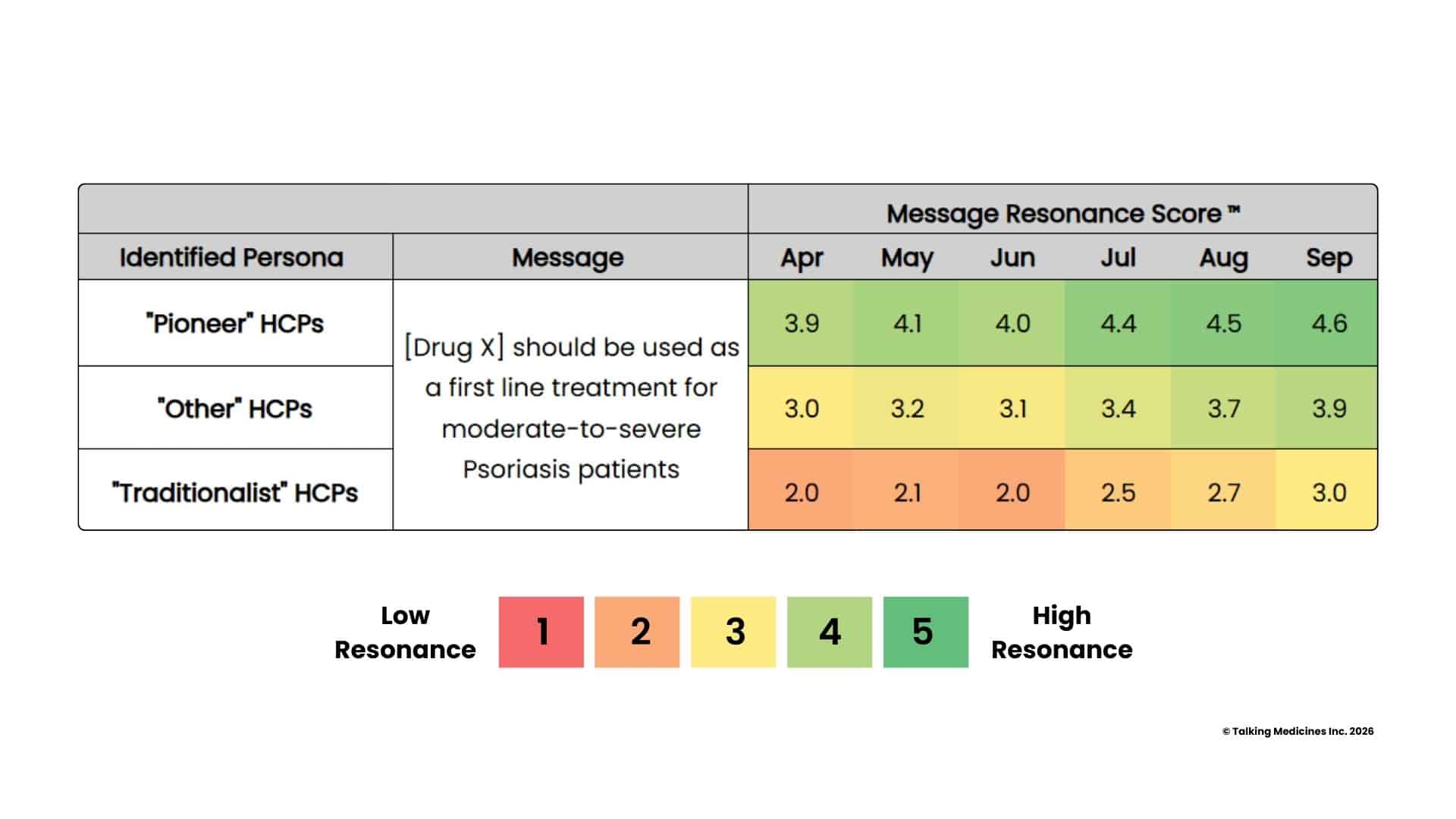
Message Resonance Score™ – How is it calculated?
Each message receives a score from 1 to 5 based on the degree of alignment identified.
For example, consider the message: “Our product is loved by healthcare professionals.”
If real-life captured data includes the statement, “I love this product!”, this demonstrates strong alignment and would receive a score of 5.
If the captured data states, “I hate this product!”, this demonstrates strong misalignment and would receive a score of 1.
If the statement reads, “It works okay for some Patients,” this represents partial alignment and would receive a mid-range score of 3.
This approach ensures scoring is based on measurable linguistic analysis rather than subjective interpretation.
Scores are aggregated and tracked over time. They can also be analyzed across cohorts or individuals to identify trends and improvement opportunities. This enables Med Comm Agencies & Pharma to monitor whether alignment is strengthening, weakening, or remaining static.
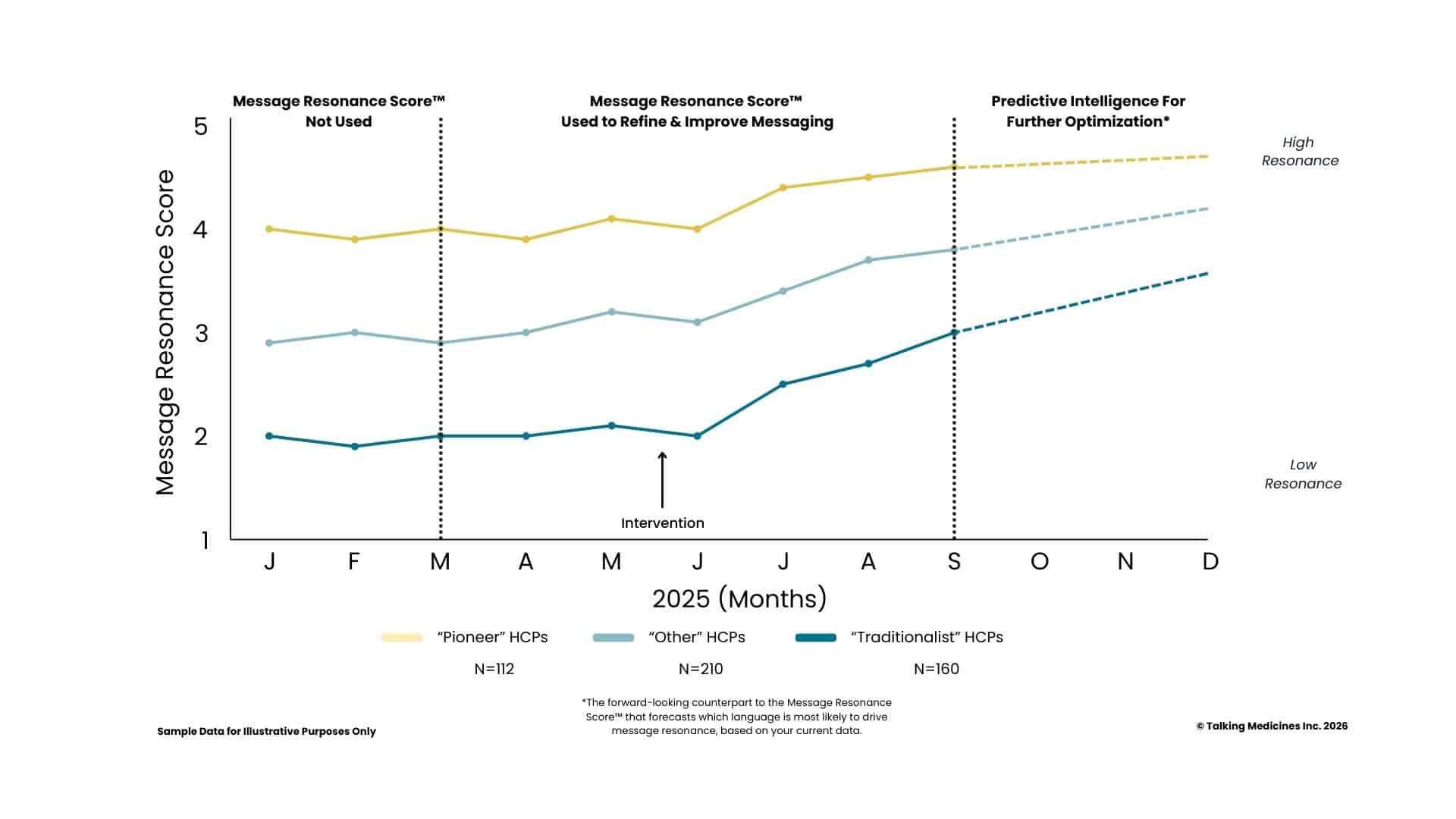
Message Resonance Score™ – Tracking over time
The Message Resonance Score™ therefore functions as both a diagnostic and a tracking mechanism. It provides a repeatable, data-driven method to understand whether real-world communications reflect strategic intent and whether that alignment is translating into behavioral influence.
If you are a Med Comms Agency looking to demonstrate measurable impact and strengthen client confidence, discover how the Message Resonance Score™ can quantify message alignment and elevate your strategic value. Connect with Talking Medicines to explore how this KPI can support your next client engagement.