GLP-1 Discontinuation: Consumers Are Changing Conversation
Healthcare has entered a new era where consumers are no longer passive recipients of treatment. They actively research medicines, compare experiences, interpret scientific evidence and openly discuss their treatment journeys online. Nowhere is this more visible than in conversations surrounding GLP-1 medicines. While much of the industry conversation around GLP-1 medicines has focused on treatment initiation and weight loss, our analysis identified a distinct set of consumer conversations focused on what happens after treatment stops. These real-life conversations provide valuable behavioral intelligence into how consumers experience long-term obesity management.
What Consumers Are Saying After GLP-1 Discontinuation
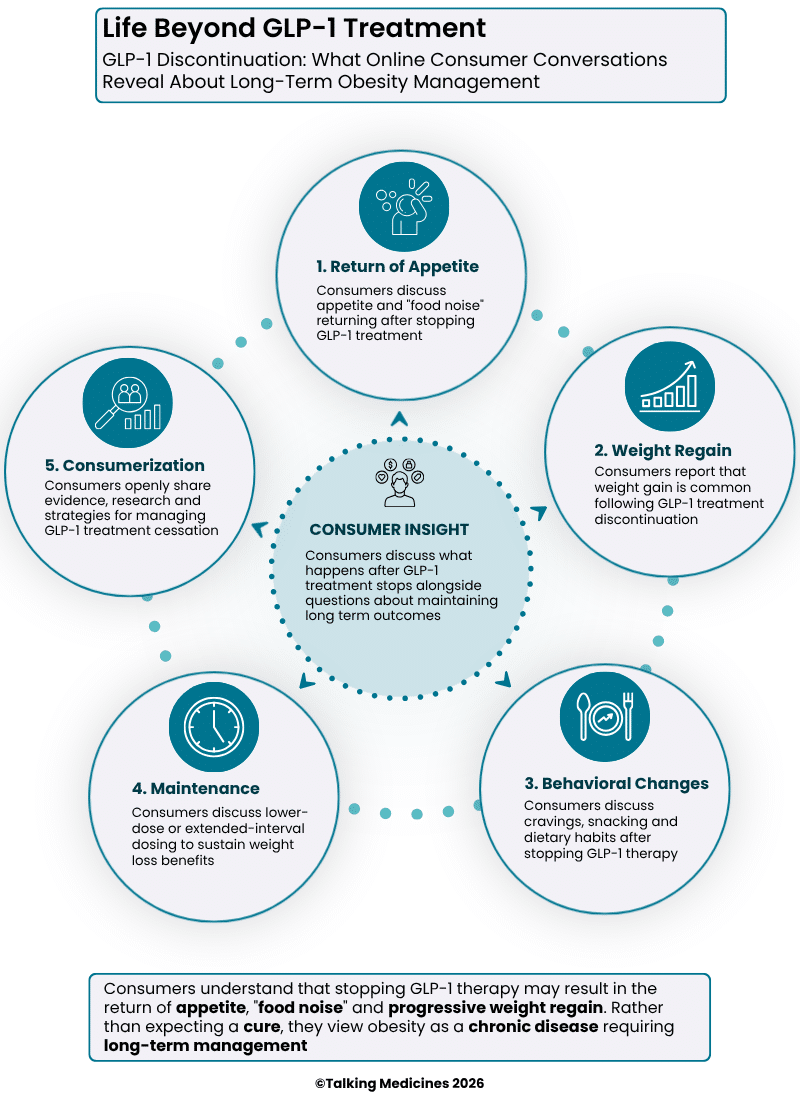
Our analysis identified several recurring themes specifically within consumer conversations about stopping GLP-1 treatment and the period that follows. Consumers are discussing the return of appetite and ‘food noise’, weight regain, and questions about how weight-management outcomes can be sustained after discontinuation. The consumer conversations provide a real-life perspective that can be considered alongside clinical evidence.
Discontinuation Is Prompting Questions About What Comes Next
Perhaps the most interesting signal is not weight regain itself, but the questions consumers are asking about what happens next.
Some consumer discussions reflect an understanding of obesity as a chronic, multifactorial health condition rather than simply a question of individual willpower. Consumers also discuss questions around longer-term treatment, including how treatment might be maintained over time and what approaches they believe may support sustained weight loss outcomes.
The way consumers engage with these questions reflects the broader trend towards informed consumerization: consumers actively seeking evidence, comparing lived experiences and discussing possible approaches to longer-term management.
Beyond Discontinuation: Consumers Are Discussing Long-Term Management
Together, these discussions show how conversations about discontinuation can extend beyond the immediate experience of stopping treatment into broader questions about sustaining outcomes over time. Some consumers discuss lower doses or longer treatment intervals in relation to maintaining outcomes. Some consumers discuss how outcomes might be maintained over the long term, including questions about ongoing treatment and other approaches to weight management. Together, these discussions show how conversations about discontinuation can extend beyond the immediate experience of stopping treatment into broader questions about sustaining outcomes over time.
Why This Matters for Life Sciences
Understanding what consumers discuss before, during and after treatment discontinuation can reveal information needs that may not be visible through clinical outcomes alone. It helps organizations understand:
- How consumers describe treatment experiences over time
- What consumers say about changes they experience after discontinuation
- What information consumers actively seek
- Which messages resonate most strongly
- Where unmet educational needs remain
- How communications can better support informed decision-making and long-term engagement
Listening to real-life healthcare conversations enables organizations to move beyond traditional research and understand how consumer conversations and behavioral themes evolve over time.
From Patient Voice to Behavioral Intelligence
At Talking Medicines, DrugVoice transforms real-life healthcare conversations into measurable behavioral intelligence.
Rather than simply measuring sentiment, DrugVoice identifies:
- Emerging behavioral signals
- Consumer and HCP personas
- Emotional drivers
- Message Resonance Score™
- Behavior changes over time
- Early signals of emerging market conversations and themes
This enables Pharmaceutical organizations to understand not only what consumers are saying, but also the behavioral themes, motivations and information needs reflected in those conversations.
Conclusion
The conversation around GLP-1 therapy does not necessarily end when treatment stops. Our analysis identified ongoing consumer discussions around appetite, “food noise”, weight regain and questions about maintaining outcomes following discontinuation. These conversations also extend into broader questions around longer-term obesity management and ongoing support.
Some consumers demonstrate engagement with scientific evidence, lived experience and treatment-related information as they navigate these questions. For organizations, understanding the post-discontinuation conversation provides an opportunity to identify emerging information needs, strengthen Patient education and develop communications that better reflect the questions consumers are asking about long-term weight management. Listening to these conversations can help organizations understand how consumer needs and expectations evolve beyond treatment itself and inform more Patient-centered approaches to longer-term obesity management.
Disclaimer: The findings should not be interpreted as clinical evidence, treatment outcomes or evidence of efficacy or safety. Social listening data may not be representative of the broader population and should be interpreted alongside clinical research and other evidence sources. The insights in this article are derived from an analysis of social listening data, providing a view of consumer conversations and behaviors related to GLP-1 therapies. Findings represent observed online conversations and should not be interpreted as clinical outcomes or representative of all individuals.
References
- Effect of Continued Weekly Semaglutide vs Withdrawal on Weight Maintenance
- Obesity and Overweight
- Obesity Management Guidelines
- Once-Weekly Semaglutide in Adults with Overweight or Obesity
- Standards of Care in Diabetes