What is Sentiment Analysis?
Sentiment analysis can also be referred to as ‘opinion mining’ which is a natural language processing technique used to determine whether data is positive, negative or neutral.
Monkeylearn, 2021
Sentiment analysis is often performed on textual data to help businesses monitor brand and product sentiment in customer feedback, and understand customer needs. Sentiment analysis is the process of detecting positive or negative sentiment in text. It’s often used by businesses to detect sentiment in social data, gauge brand reputation, and understand customers.
Since customers express their thoughts and feelings more openly than ever before, sentiment analysis is becoming an essential tool to monitor and understand that sentiment. Automatically analysing customer feedback, such as opinions in survey responses and social media conversations, allows brands to learn what makes customers happy or frustrated, so that they can tailor products and services to meet their customers’ needs.
Example of Why Sentiment Analysis is Important
Sentiment Analysis is a widely adopted technique used by many brands. A great example is Nike. In 2018 Nike launched a marketing campaign involving controversial National Football League quarterback Colin Kaepernick. The immediate response to Kaepernick’s announcement was overwhelmingly negative, with customers even responding with a #justburnit hashtag to the campaign. However, due to the controversial ad, Nikes sales jumped 31% experiencing a small wave of positive sentiment as a result. Therefore, it pays brands to listen to all customers not just the loudest ones.

How to be Different with Sentiment Analysis
Sentiment analysis is important and everyone can do it. However, sentiment analysis is about people being either happy or sad. We have gone way beyond this, now is the time to take one step further and start looking deeper into the experiences our customers have. Modern sentiment analysis is about context and sentiment is only one element of this.
Playing the numbers game on visits, shares, re-tweets and mentions online is what Katie Delahaye Paine, author of ‘Measure What Matters: Online Tools For Understanding Customers, Social Media, Engagement, and Key Relationships’, says are to quote ‘quantity’ or ‘vanity metrics.’
She says that if we look at numbers only, it can give us a false sense of hope that our content is generating leads for our brand or business. With sentiment analysis, we dig deeper and look at ‘quality metrics’.
‘Quality metrics include opinions, feelings, satisfaction ratings, the quality of shares, comments, re-tweets, replies, ratings or conversations, as well as the overall quality of engagement over time. The benefit of this measurement and analysis is that it can help uncover and drive learnings from the key aspects of your brand; awareness, appeal, service, and content and allow you to uncover the positive, negative or indifferent aspects of your brand being shared online and importantly react to it.’
Of course, the overall quantitative analytics packages are hugely important, but used in isolation can be highly misleading in terms of online brand engagement.
The Patient Confidence Score
The Patient Confidence Score is an example of the new version of sentiment which covers the context surrounding the data to include high contextual data to better understand patients overall experience.
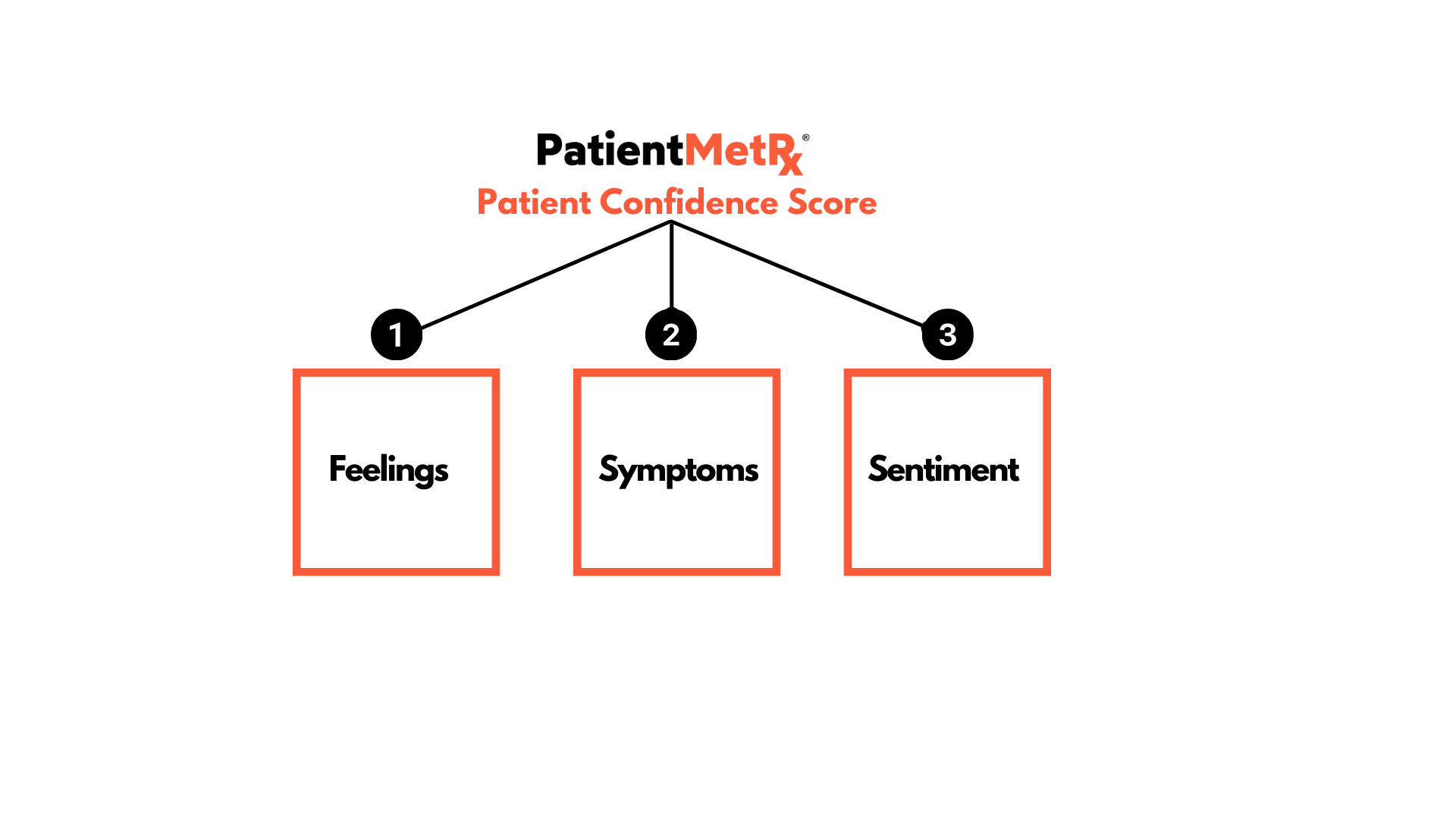
To find out how the PCS can help understand the feelings, symptoms and and sentiment that your patients have towards your medicine brands book in a discovery session below, let us know what brands you would like to look at and we will make sure we generate a brand report to show you in that session. Do Things Differently and listen to what your patients are really saying.
#DoThingsDifferently
Book a Discovery Session Here
References:
MonkeyLearn, (2021) ‘Sentiment Analysis: A Definitive Guide’ Available at: https://monkeylearn.com/sentiment-analysis/ [Accessed 3 September 2021]
Wonderflow, (2018) ’10 Sentiment Analysis Examples That Will Help Improve Your Products’ Available at: https://www.wonderflow.ai/blog/sentiment-analysis-examples [Accessed 3 September 2021]
SmartInsights, (2014) ‘Online brand sentiment analysis’ Available at: https://www.smartinsights.com/social-media-marketing/social-media-listening/managing-online-brand-sentiment/ [Accessed 3 September 2021]