The Emergence of Informed Consumerization
People begin their treatment journey as Patients, but their online behavior increasingly reflects informed consumers; actively seeking information, comparing experiences and sharing practical advice.
Our analysis found that many consumers recognized weight loss plateaus as a normal part of treatment. Rather than discussing discontinuation, many consumers described exploring ways to manage plateaus by:
- Modifying physical activity
- Managing hydration
- Discussing dose adjustments
- Sharing practical advice with other consumers
Together, these conversations illustrate informed consumerization: a shift towards greater knowledge, confidence and active participation in managing health and treatment decisions.
Five Behavioral Signals Emerging from Consumer Conversations
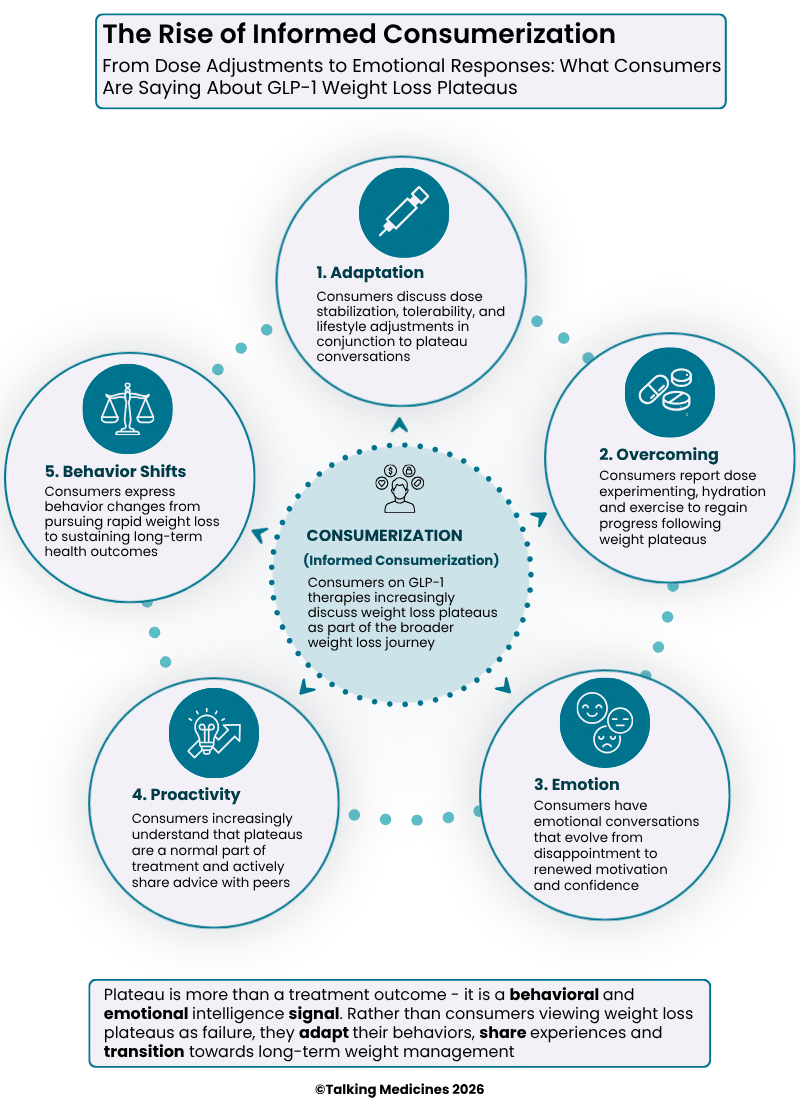
- Consumers Become More Informed : Consumers increasingly understand that plateaus are expected during GLP-1 treatment and are often discussed as part of a transition towards weight maintenance, rather than treatment failure
- Consumers Actively Self-Manage : Rather than waiting for clinical intervention, consumers modify behaviors, monitor outcomes and share strategies for overcoming plateaus
- Consumers Experience an Emotional Journey: Many conversations progress from frustration and uncertainty towards resilience and renewed motivation
- Consumers Shift Their Mindset :The conversation gradually changes from rapid weight loss towards maintaining healthier lifestyles and sustaining long-term outcomes
- Consumers Discuss Treatment Realities : Dose stabilization, medication tolerance and side effects become increasingly important as treatment progresses, shaping both expectations and behaviors
Why This Matters for Life Sciences
Traditional healthcare metrics tell organizations what has happened. Behavioral intelligence can provide additional context for understanding why it happened. Understanding how consumers think, feel and behave during treatment provides valuable evidence for:
- Improving education
- Optimizing medical and commercial messaging
- Supporting adherence and persistence
- Identifying emerging behavioral trends
- Measuring message resonance throughout the Patient journey
This moves organizations beyond sentiment analysis towards understanding the behavioral drivers that influence healthcare decisions.
From Consumer Conversations to Behavioral Intelligence
At Talking Medicines, we believe Patient/consumer conversations represent one of the richest sources of behavioral evidence available.
DrugVoice transforms unstructured, real-life healthcare conversations into behavioral intelligence that measures how Patients respond to medical and commercial messaging.
By identifying emerging behavioral signals such as weight loss plateaus, organizations can better understand evolving Patient needs, improve communication strategies and make more informed evidence-led decisions.
Conclusion
The emergence of plateau as the leading behavioral outcome highlights how consumers are becoming increasingly informed participants in their own healthcare. These conversations reflect more than treatment experiences; they reveal changing behaviors, emotions and expectations. This is informed consumerization in action.
For Pharmaceutical organizations, understanding these behavioral signals provides an opportunity to improve Patient engagement, optimize message resonance and support better long-term health outcomes through evidence-based behavioral intelligence.
Disclaimer: The findings presented are based on analyses of online conversations. They reflect reported perceptions, experiences, and behaviors and should not be interpreted as clinical evidence, treatment outcomes or evidence of efficacy or safety. Social listening data may not be representative of the broader Patient population and should be interpreted alongside clinical research and other evidence sources.The insights in this article are derived from an analysis of social listening data, providing a view of consumer conversations and behaviors related to GLP-1 therapies. Findings represent observed online conversations and should not be interpreted as clinical outcomes or representative of all Patients.
References
- Adherence to Long-Term Therapies: Evidence for Action
- Effect of Continued Weekly Subcutaneous Semaglutide vs Placebo on Weight Loss Maintenance in Adults with Overweight or Obesity
- Once-Weekly Semaglutide in Adults with Overweight or Obesity
- The Four Pillars of Obesity Treatment
- Tirzepatide Once Weekly for the Treatment of Obesity